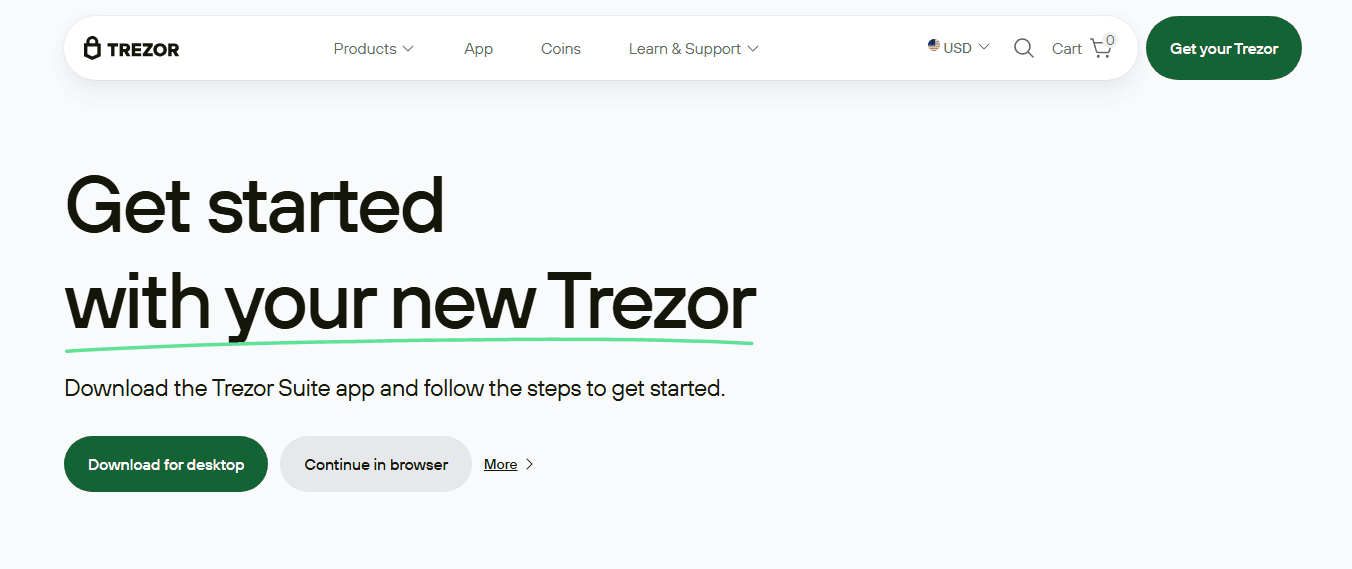
Trezor.io/start – Complete Guide
Introduction
In the rapidly evolving world of digital finance, security has become the cornerstone of managing cryptocurrencies. With cyber threats on the rise, billions of dollars worth of crypto assets have been lost to hacking incidents, phishing attacks, and scams. To combat this, hardware wallets like Trezor have become the gold standard for safeguarding digital currencies. At the center of this secure ecosystem lies Trezor.io/start, the official onboarding portal that helps users set up their Trezor device safely and correctly.
Whether you are using a Trezor Model One, Trezor Model T, or the newer Trezor Safe series, the platform at Trezor.io/start ensures you go through a step-by-step, authenticated, tamper-proof setup experience. This 2000-word guide explores everything you need to know about Trezor setup, security practices, troubleshooting, and essential crypto-management strategies.
What is Trezor.io/start?
Trezor.io/start is the official Trezor onboarding URL used to initialize your new hardware wallet. It provides:
Device verification
Firmware update and installation
Connection to Trezor Suite
Wallet creation
Backup generation
Security instructions
Recovery seed education
Safe-first configuration
Unlike third-party sites that may pose as fake setup portals, Trezor.io/start is the only safe place to begin your Trezor journey. It ensures you avoid phishing traps and that your wallet is configured with genuine firmware from SatoshiLabs.
Why Visit Trezor.io/start?
Before using a Trezor device to store crypto, the wallet must undergo a secure initial setup. Visiting Trezor.io/start is necessary because:
It provides official firmware required to operate the wallet.
It walks you through the backup process, helping prevent irreversible loss of funds.
It ensures secure pairing between your device and the Trezor Suite app.
It verifies the authenticity of your hardware wallet.
It supports multiple operating systems like Windows, macOS, and Linux.
Skipping this official onboarding process can expose users to fake software, malware, or manipulated wallet initialization kits.
Step-by-Step Guide: How to Use Trezor.io/start
Step 1: Unbox Your Trezor Device
When you receive your Trezor, always ensure:
The box is factory-sealed
There is no tampering
The holographic seal is intact
The USB cable looks authentic
The recovery seed slip is blank (not pre-filled)
If anything looks suspicious, stop immediately and contact Trezor support.
Step 2: Visit the Official Setup Page
Open your preferred browser and go to:
Make sure:
The URL is correct
It uses HTTPS
You are not redirected elsewhere
Phishing sites often use misspellings like trez0r, trezor-start, or start-trezor-wallet.
Step 3: Choose Your Device Model
The page allows you to select your Trezor model:
Trezor Model One
Trezor Model T
Trezor Safe 3 (Bitcoin or Multi)
Trezor Safe 5 (Bitcoin or Multi)
Each device follows a similar setup pattern but may have slight differences in screen navigation.
Step 4: Install and Launch Trezor Suite
You will be instructed to download Trezor Suite, the all-in-one crypto management dashboard. Trezor Suite provides:
Portfolio tracking
Market price monitoring
Buying & selling crypto
Sending and receiving coins
Coin management (BTC, ETH, USDT, etc.)
Privacy-enhancing features
Device settings & firmware updates
You can install it on:
Windows
MacOS
Linux
Trezor Suite is preferred over browser-based connections due to improved privacy, anti-phishing, and enhanced security architecture.
Step 5: Connect Your Trezor via USB
Using the included USB cable, plug your Trezor device into your computer.
Trezor Suite will automatically detect it and prompt you to:
Install the latest firmware
Continue setup
Create or recover a wallet
If your device already came with firmware installed (rare), treat it as a red flag and contact Trezor immediately.
Step 6: Install Firmware
Firmware is the operating system that powers your wallet. At Trezor.io/start, you will install official, signed, legitimate firmware directly from Trezor servers.
During this process:
The device reboots
Verification occurs on-screen
You confirm installation manually
This protects against compromised firmware vulnerabilities.
Step 7: Create a New Wallet
Once firmware is installed, choose "Create New Wallet" inside Trezor Suite.
This process generates:
A fresh HD (Hierarchical Deterministic) wallet
Private keys stored securely on your hardware device
A new master seed
None of this data ever leaves your Trezor hardware.
Step 8: Generate Your Recovery Seed
Trezor will display a 12-word, 18-word, or 24-word recovery seed, depending on the model.
This is the most critical step.
Your recovery seed:
Can restore your wallet on any Trezor
Can recover your crypto if your device is lost, broken, or stolen
Must never be shared, photographed, or stored digitally
Write it down on paper in the exact order shown.
Never:
Store it on cloud storage
Enter it into any website
Save it on your phone or PC
Share it with anyone
Use public WiFi during setup
Your entire crypto collection depends on this seed’s confidentiality.
Step 9: Confirm the Seed on Your Trezor
You will be asked to confirm the seed on the device screen.
This ensures:
You wrote it correctly
It was not captured by malware
You understand its importance
Trezor never asks you to type your seed into the computer—only on the physical device.
Step 10: Secure Your Device with a PIN
Next, you’ll set a device PIN. This PIN:
Protects your Trezor against unauthorized access
Must be entered each time you connect
Can range from 4 to 50 digits depending on the model
Choose a PIN that is:
Non-predictable
Not containing birthdays
Not written on the device
Step 11: Customize Your Trezor Suite Dashboard
After completing security setup, explore the Suite:
Add accounts (BTC, ETH, ERC-20, etc.)
Check your portfolio
Manage tokens
Enhance privacy settings
Enable Tor connection
Configure labeling and metadata
Understanding the Recovery Seed (Most Important Concept)
Your recovery seed is the ultimate key to your crypto. Anyone possessing it can access your digital assets.
Keep your seed:
Offline
On paper
In a fireproof/waterproof location
Away from cameras or smart devices
For greater safety, use:
Trezor Billfodl
Cryptosteel Capsule
Any metal seed storage kit
These protect your backup from physical damage.
What You Can Do After Completing Trezor Setup
Once your Trezor wallet is ready, you can start managing crypto safely. You can:
1. Buy Crypto
Through integrated partners like:
MoonPay
Simplex
Invity
2. Swap or Exchange Crypto
Trade between BTC, ETH, USDT, USDC, LTC, XRP, and dozens of others.
3. Send & Receive Funds
Safely transfer crypto from exchanges or wallets.
4. Manage NFT Assets
With Ethereum or other supported networks.
5. Track Market Prices
Trezor Suite shows real-time charts and price alerts.
6. Enhance Privacy
Using features like:
Tor network routing
Coin control
UTXO management (for Bitcoin)
Common Problems & Solutions During Trezor.io/start Setup
Here are frequent issues and fixes:
🔧 Device Not Detected
Try:
Changing your USB cable
Using another port
Updating Trezor Suite
Rebooting the PC
🔧 Firmware Installation Fails
Ensure:
Uninterrupted USB connection
Updated operating system
No antivirus blocking the process
🔧 Seed Backup Issues
If you lost the seed before confirming:
Reset the device
Create a new wallet
Generate a fresh backup
Security Best Practices After Setup
Once your Trezor is configured:
✔ Keep your recovery seed offline
✔ Use a strong, unique PIN
✔ Enable passphrase feature (advanced users)
✔ Always access the official Trezor Suite
✔ Avoid connecting your Trezor to unknown devices
✔ Regularly update firmware
✔ Use Tor or VPN for privacy
✔ Double-check all addresses before sending crypto
Storing crypto on an exchange exposes you to counterparty risk. Hardware wallets eliminate this by giving you full self-custody.
Why Trezor Remains a Top Choice in 2025
Today, Trezor stands as one of the most trusted hardware wallet ecosystems, excelling in:
Open-source architecture
Superior safety features
User-friendly design
Long-term reliability
Top-tier transparency
Unlike many competitors, Trezor does not rely on closed-source firmware, giving the crypto community complete visibility into how security is managed.
Conclusion
Trezor.io/start is the essential gateway for safely onboarding into the Trezor ecosystem. By using this official platform, you ensure:
Authentic firmware installation
Correct wallet initialization
Secure backup generation
Device protection against phishing
A smooth connection to Trezor Suite
With your Trezor device fully configured, you gain full sovereignty over your cryptocurrencies—without depending on exchanges, cloud platforms, or centralized systems. The combination of Trezor’s hardware security and the guided setup at Trezor.io/start empowers users to manage digital assets with confidence, control, and peace of mind.